Things That Live Here Too: Galveston’s Ghost Wolves Are Carrying the DNA of a Vanished Population
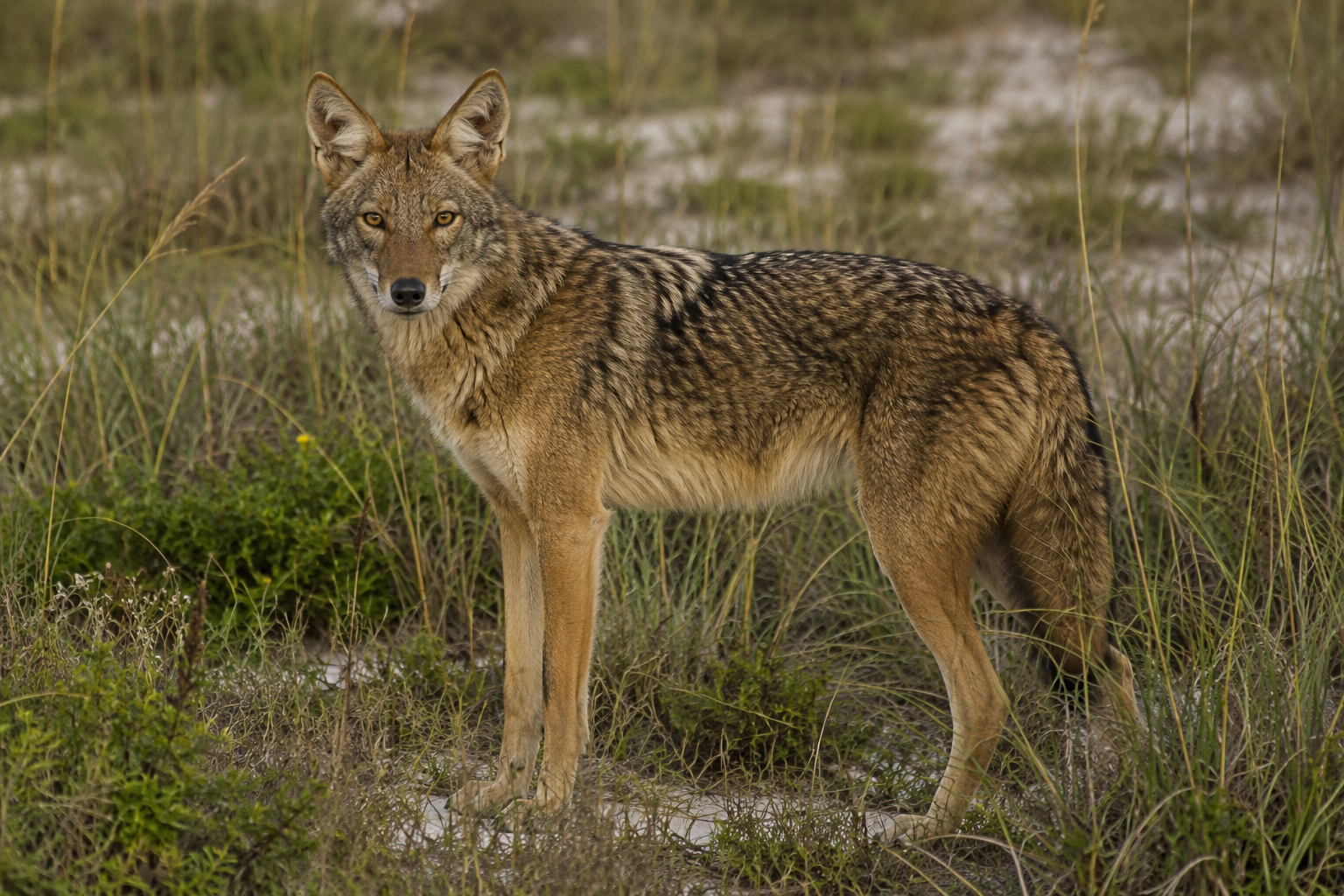
Things That Live Here Too: Galveston’s Ghost Wolves Are Carrying the DNA of a Vanished Population
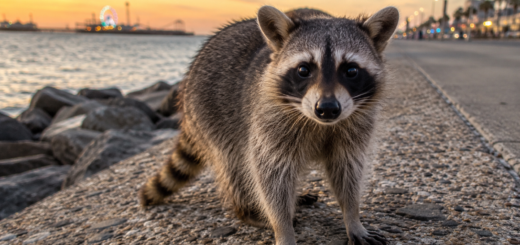
If you see a long-legged canine moving through the grass on Galveston Island, the obvious answer is coyote.
Most of the time, that answer is technically correct.
It just is not the whole answer.
Some of the coyotes living on Galveston Island carry genetic material from the red wolf, an endangered native predator that once lived across a huge portion of the southeastern United States before disappearing from the wild along the Gulf Coast.
Researchers call that surviving genetic material ghost ancestry.
The animals carrying it have acquired an equally fitting local name.
Ghost wolves.
They are not wolves secretly surviving undiscovered on Galveston Island. They are not a newly recognized species. They are genetically admixed coyotes whose ancestors interbred with red wolves before red wolves disappeared from coastal Texas and Louisiana.
That distinction somehow makes their story even stranger.
Red wolves vanished from this landscape.
Part of them did not.
Red Wolves Once Lived Here
Before highways, resorts, beach houses, subdivisions, and several million annual arguments about Galveston traffic, red wolves occupied a large portion of the eastern and south-central United States.
Their historical range included Texas.
By the twentieth century, predator-control programs, habitat loss, development, and persecution had devastated red wolf populations. As their numbers fell, coyotes expanded into areas formerly occupied by wolves.
The remaining wolves began interbreeding with coyotes.
By the 1970s, the situation had become desperate enough that the U.S. Fish and Wildlife Service began capturing the last remaining red wolves from coastal Texas and Louisiana in an attempt to prevent the species from disappearing completely.
Only 14 animals ultimately became the founders of the modern captive red wolf population.
Red wolves were declared extinct in the wild in 1980. They were later reintroduced into eastern North Carolina, where the country’s only wild red wolf population exists today. As of July 2026, the U.S. Fish and Wildlife Service estimated only 23 to 24 adult and subadult red wolves in the wild, along with approximately 12 to 16 pups. Another 295 live within the managed Red Wolf SAFE population.
For decades, the story seemed fairly straightforward.
The Gulf Coast red wolves were gone.
Then Galveston’s coyotes complicated everything.
Something About Galveston’s Coyotes Looked Different
People along the Gulf Coast had reported unusual-looking coyotes for years.
Some appeared larger.
Some had broader heads or longer legs.
Some had reddish coloring.
Wildlife biologist and Galveston resident Ron Wooten had been photographing the island’s canines and became convinced that there was something unusual about them.
Instead of accepting the standard explanation that they were simply coyotes, he contacted researchers at Princeton University.
That decision eventually changed what scientists knew about the animals living on the island.
Wooten provided researchers with genetic material collected from two road-killed Galveston canines.
One sample arrived in a particularly glamorous piece of laboratory equipment known as a dirty scalpel.
Science is majestic like that.
Researchers extracted the DNA and compared it with samples from coyotes, gray wolves, eastern wolves, and red wolves.
The results were not what they expected.
The Galveston animals shared genetic material with red wolves. Some of that material included red wolf genetic variants that were not found in the captive red wolf population scientists were using for comparison.
Something believed lost from the Gulf Coast had survived inside coyotes.
That Is Where the “Ghost” Comes From
The name sounds like somebody invented it for a Galveston ghost tour.
There is actual genetics behind it.
When individuals from two populations reproduce, genetic material can move from one population into another. Scientists call this introgression.
Red wolves and coyotes interbred as the red wolf population collapsed.
The wolves eventually disappeared from the Gulf Coast as a recognizable wild population, but some of their genes remained inside descendants of those earlier wolf-coyote pairings.
Those inherited genetic variants can be described as ghost alleles because they preserve genetic material from a population that is no longer present in its original form.
Galveston’s ghost wolves therefore carry pieces of an animal population that officially disappeared from the region decades ago.
The wolf vanished.
Some of its DNA stayed behind.
Researchers Found More Than Just Two Strange Coyotes
The first discovery raised an obvious question.
Were those two animals unusual exceptions, or was red wolf ancestry still circulating through Galveston’s larger coyote population?
Researchers went back for more.
A later study analyzed 203 fecal samples collected from Galveston Island and used them to identify individual animals and examine their ancestry.
The results made the original discovery much harder to dismiss as a genetic fluke.
Researchers identified 24 individual Galveston coyotes with more than 10 percent red wolf ancestry.
They also identified eight animals from nearby mainland Texas with more than 10 percent red wolf ancestry. Two mainland animals had estimates exceeding 50 percent.
The researchers found at least four family groups on Galveston Island.
They also identified five genetic variants that were absent from the reference populations of captive red wolves, gray wolves, and southeastern coyotes used in the study. Those variants may represent red wolf genetic diversity that disappeared from the modern captive population.
That is the part that turned Galveston’s unusual coyotes from a local curiosity into something with international conservation significance.
Galveston May Be Holding Genetic Material the Red Wolf Population Lost
Every living red wolf in today’s managed population descends from a very small number of founders.
That creates a serious biological problem.
When an endangered species passes through an extreme population bottleneck, genetic diversity disappears with the animals that were lost.
A species can survive numerically while still losing genetic options that may have helped earlier populations adapt to disease, changing environments, climate, food availability, and other pressures.
Galveston’s canines may have preserved some of those missing options.
The 2022 Galveston study concluded that the island and nearby mainland populations could eventually contribute to red wolf conservation through advanced reproductive and genetic techniques designed to recover lost variation and reduce inbreeding.
Researchers studying similar Gulf Coast canines in southwestern Louisiana have found substantial red wolf ancestry there as well. Some Louisiana coyotes carried exceptionally high proportions of red wolf ancestry, reinforcing the idea that Gulf Coast coyote populations may function as reservoirs for red wolf genetics.
The Gulf Coast Canine Project now studies these animals across portions of Texas and Louisiana.
What began with somebody noticing that Galveston’s coyotes looked a little strange became an entire conservation research program.
So Are They Wolves or Coyotes?
This is where biology refuses to provide the tidy answer humans prefer.
The Galveston animals are generally described by researchers as coyotes with red wolf ancestry.
Calling them ghost wolves does not mean scientists have quietly declared them a separate species of wolf.
The Gulf Coast Canine Project uses the term to recognize their unusual evolutionary history and the red wolf genetic material they carry.
Their appearance can vary too.
A photograph cannot reliably tell you how much red wolf ancestry an individual animal carries.
Some may look more like ordinary coyotes.
Others may appear larger, heavier, darker, redder, or otherwise unusual.
Genetics, not appearance alone, revealed what was happening here.
So if you see one crossing a field on Galveston Island, you cannot determine its ancestry just by staring harder at it.
It is still worth appreciating what the population represents.
They Have Been Living Beside Us the Whole Time
One of the best parts of the ghost wolf story is how ordinary their surroundings can be.
These animals do not live inside some inaccessible wilderness hundreds of miles from civilization.
They live on Galveston Island.
Researchers have documented them around coastal prairie, wetlands, undeveloped land, roads, neighborhoods, and heavily altered human landscapes.
They raise families here.
They hunt here.
They cross roads here.
They move through the same narrow barrier island occupied by tens of thousands of people and visited by millions more.
The Gulf Coast Canine Project uses GPS collars, camera surveys, genetic sequencing, scat collection, and other methods to understand where the animals move, what they eat, how they are related, and how development affects them.
They were hiding in plain sight because nobody realized how much history they were carrying.
Galveston Is Becoming More Crowded Around Them
Living on a barrier island gives wildlife one problem that mainland animals do not face quite as severely.
There is only so much land.
Development removes or divides habitat.
Roads cut across movement routes.
More traffic increases the chance that animals attempting to move between feeding, resting, and breeding areas will be struck.
Researchers have been particularly concerned about vehicle deaths involving Galveston’s ghost wolves.
That concern recently produced a visible change along the island.
In 2026, the Texas Department of Transportation installed 10 wildlife crossing signs along a 19-mile stretch of FM 3005 after researchers from the Gulf Coast Canine Project raised concerns about animal mortality along the highway.
TxDOT and Galveston County examined wildlife mortality data from 2020 through 2025 and placed the signs in areas where deaths occurred most frequently.
Those signs are not announcing that packs of wolves are preparing to attack minivans.
They are asking drivers to pay attention.
For an animal carrying genetic material that may exist nowhere else in exactly the same combination, a vehicle collision can represent more than the loss of one coyote.
It can remove another piece of that surviving genetic history.
Development Has Made Their Future a Local Issue
The ghost wolves have also become part of a much larger Galveston argument about development and remaining natural habitat.
The Gulf Coast Canine Project has focused considerable attention on the East Beach family group, whose territory overlaps land undergoing major development.
Researchers and local conservation advocates have argued that development should account for wildlife movement, habitat connectivity, and the ecological importance of the island’s remaining undeveloped areas.
The issue is larger than one animal.
Barrier islands are narrow ecosystems.
When natural areas become isolated from one another, wildlife still attempts to move between them.
The animal does not know where somebody drew the property boundary.
It knows where food, shelter, mates, and safe territory used to be.
Galveston will continue changing.
The question is whether some room remains for the things that were already living here.
They Are Wild Animals
The fascination surrounding ghost wolves creates another problem.
People want to see them.
That is understandable.
Following them, feeding them, approaching pups, attempting to call them closer, or treating their known territories like wildlife attractions is not useful.
These animals should remain wary of humans.
Coyotes survive extremely well around human development partly because they adjust their behavior to avoid us.
Feeding them can change that relationship.
A ghost wolf approaching people for food does not become more valuable because someone got a better photograph.
It becomes more vulnerable.
Watch from a distance.
Give an animal room to leave.
Keep pets controlled.
Never feed it.
And if one crosses the road ahead, allow it to finish crossing instead of discovering whether your phone can focus at 45 miles per hour.
Galveston has enough questionable driving decisions without adding wildlife photography to the list.
They Could Help Save an Animal That Disappeared From Texas
This is what makes the ghost wolves different from almost everything else in this series.
They are interesting because they live here.
They matter because of what survived inside them.
Red wolves once occupied this landscape.
Humans nearly eliminated them.
The last survivors from coastal Texas and Louisiana helped establish a captive population that kept the species from disappearing completely.
But capturing those few animals could preserve only the genetic diversity those individual wolves happened to carry.
Other red wolf genes seemed to have vanished.
Then researchers tested Galveston’s coyotes.
Some of that missing genetic history had spent decades traveling quietly through another animal.
The red wolves did not secretly survive on Galveston Island.
Something stranger happened.
Coyotes carried pieces of them forward.
Things That Live Here Too
Galveston is known for the Gulf, the Seawall, fishing piers, ships, beaches, storms, old buildings, and the collection of human beings who decided living on a sandbar in the Gulf of Mexico seemed reasonable.
But another version of Galveston’s history moves through the grass after dark.
It has four legs.
It looks enough like a coyote that people overlooked what made it different for decades.
And somewhere inside its DNA are fragments of wolves that once occupied the Texas coast.
That is the ghost in Galveston’s ghost wolf.
Not an animal returned from extinction.
A piece of one that never completely left.