After Ike: The Hurricane That Changed Galveston Island
Hurricane Ike did more than flood streets and tear apart buildings. It changed where Galvestonians lived, how the island rebuilt, what it protected, and who could afford to return.
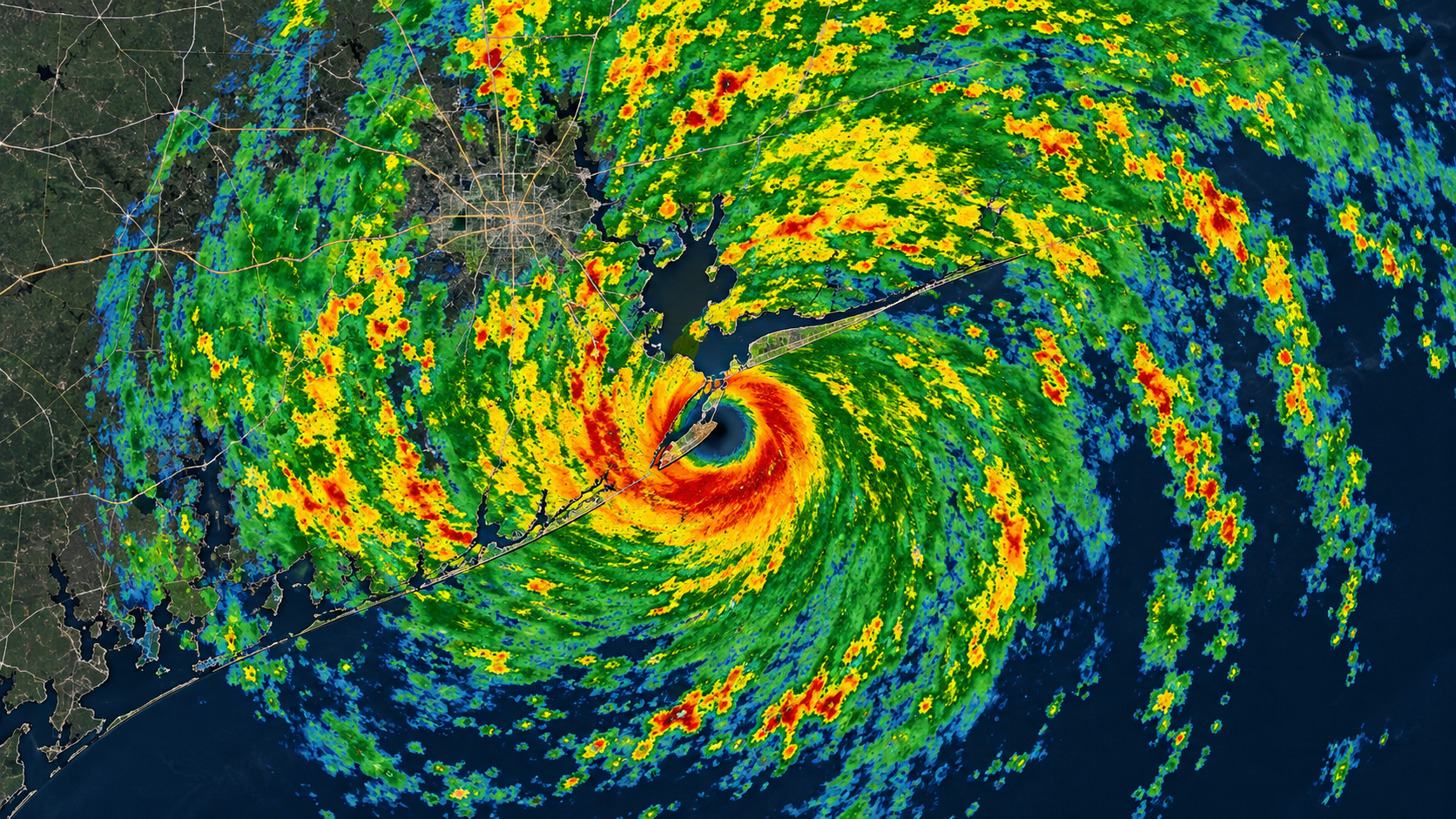
On September 13, 2008, Hurricane Ike reached the north end of Galveston Island at roughly 2:10 in the morning. It made landfall as a Category 2 hurricane with sustained winds near 110 miles per hour.
That number never told the full story.
Ike had grown into an enormous storm before it reached Texas. Its wide wind field pushed Gulf water toward the coast for hours, producing a destructive storm surge across Galveston Island, Bolivar Peninsula, and Galveston Bay. At Pier 21, a federal water-level station recorded a storm tide of 10.82 feet before the equipment failed. Water reached about 13 feet at the University of Texas Medical Branch. National Weather Service, NOAA water-level report
The seawall took the first beating and reduced the direct force along much of the protected side of the city. It could not seal Galveston inside a dry box. Gulf water entered from the front while bay water pushed into neighborhoods from behind. Buildings flooded. Roofs peeled away. Boats landed where boats did not belong. Fires burned while emergency crews faced streets filled with water and debris.
When daylight returned, Galveston still occupied the same strip of land. It was not the same island.
The Night the Water Came From Both Sides
People often describe a hurricane by its category. Ike proved how badly that single number can mislead anyone living on a barrier island.
Wind determines a hurricane’s category. It does not fully describe the reach of its surge. Ike arrived with a broad circulation that moved a massive amount of water. The storm flooded large sections of Galveston, devastated Bolivar, damaged thousands of structures across the county, and cut communities off from the basic systems that made daily life possible.
The island lost electricity, water service, sewer service, communications, and reliable road access. Thousands of residents had evacuated. Many who remained needed help after landfall. Officials restricted reentry because returning residents would have entered a city that could not safely support them.
That delay added another injury. People waited away from home while rumors traveled faster than dependable information. They did not know whether they still had a roof, whether water had reached the second floor, or whether the photographs and furniture they had left behind still existed.
For many families, the first trip home ended one version of their lives.
The Island Lost More Than Buildings
Ike destroyed property, but the deeper change came through displacement.
Some residents repaired their homes and returned. Others spent months dealing with insurance claims, federal assistance, contractors, permits, mold, and rebuilding costs. Some could not wait that long. Some could not afford to rebuild under new requirements. Some found work and housing elsewhere while the island recovered. Many never moved back.
Galveston’s population fell by more than 15 percent after Ike. That loss did not land evenly across the island. Lower-income households, renters, older residents, and families with fewer resources faced the hardest road back. Damaged rental housing disappeared. Public housing became part of a long and bitter fight over what would be rebuilt, where it would be placed, and who Galveston’s recovery was meant to serve. Governing’s post-Ike analysis
The argument lasted because it reached beyond damaged apartments. It raised a question that still follows disaster recovery everywhere: Does rebuilding restore a community, or does it rebuild the land for whoever can afford what comes next?
Galveston recovered, but not every Galvestonian recovered with it.
UTMB Became a Test of Whether Galveston Could Recover
The University of Texas Medical Branch was one of the island’s largest employers and one of its most important institutions. Ike sent a storm surge through the campus and flooded more than one million square feet of building space. Hospital operations, laboratories, equipment, utilities, and records sustained severe damage.
The damage threatened more than medical care. UTMB supported thousands of local jobs and fed money into businesses across the island. Nearly 3,000 workers lost their jobs during the financial crisis that followed the storm. For a city already losing residents, housing, and income, the possibility of a permanently reduced medical campus created another reason to wonder whether Galveston could return as a working community instead of surviving only as a tourist destination.
UTMB rebuilt with floodgates, protective walls, elevated equipment, improved pumping systems, hardened utilities, and other defenses meant to keep a future surge from disabling the entire campus. Its recovery became one of the clearest examples of the island’s new approach. Rebuilding could no longer mean replacing what had stood before. Major institutions had to prepare for the next flood while repairing damage from the last one. FEMA’s UTMB mitigation case study
Galveston Rebuilt Higher, Harder, and More Carefully
After Ike, elevation stopped being an abstract line on a flood map. It became the difference between repairing a house, raising it, demolishing it, or walking away.
Substantially damaged properties faced updated floodplain rules. Owners seeking to rebuild often had to elevate structures or bring them into compliance with newer requirements. Across the island, lifted houses, taller foundations, flood vents, breakaway lower walls, and elevated mechanical equipment became more common.
Those changes improved protection, but they also increased the price of returning home. A family could own a damaged house outright and still lack the money required to rebuild it to a safer standard. Insurance costs, construction prices, contractor shortages, and delayed aid forced decisions that had little to do with how deeply someone loved Galveston.
The city eventually received more than $218 million through 33 Hurricane Ike disaster-recovery projects. That money supported infrastructure and public recovery work, but the timeline stretched across years. Galveston’s comprehensive plan, adopted in 2011, became a framework for recovery and future resilience. Even in 2026, the city described that post-Ike plan as the foundation that had guided fifteen years of decisions involving housing, land use, transportation, economic development, and disaster planning. City recovery funding records, City comprehensive plan update
Ike did not create every change that followed. It forced the island to make choices sooner, with fewer easy options.
The Natural Island Changed Too
The built city drew the most attention, but Ike also rearranged the coast around it.
The storm damaged dunes, stripped vegetation, moved sand, flooded wetlands, and buried oyster reefs beneath sediment. Federal recovery reporting estimated that Ike affected nearly 8,000 acres of oyster reef in Galveston Bay. On Bolivar, entire sections of the built landscape disappeared. Debris entered the Gulf Intracoastal Waterway and required a major removal effort. Federal Gulf Coast recovery report
Beach nourishment, dune restoration, wetland protection, oyster restoration, and large coastal-defense proposals gained new urgency after the storm. The continuing Coastal Texas project, often discussed through the broader concept of an “Ike Dike,” grew from the hard lesson that the seawall protects only part of a connected coastal system. The bay, port, ship channel, wetlands, west end, and Bolivar Peninsula all affect how water moves around Galveston. U.S. Army Corps of Engineers Coastal Texas study
The question after Ike was no longer whether another major surge would come. The question was how much could be protected before it did.
Tourism Returned Faster Than Ordinary Life
Visitors could see businesses reopen, beaches fill, and cruise ships return. Those signs mattered. Tourism helped restart the island’s economy and showed the rest of Texas that Galveston was still here.
They did not mean every neighborhood had recovered.
Disaster recovery happens at different speeds. A hotel can reopen while a family still fights an insurance company. A restaurant can serve a full dining room while its employees commute from the mainland because island housing has become scarce. A festival can return while a damaged public facility waits for funding.
That uneven recovery changed the balance of the island. Tourism, vacation properties, short-term rentals, major institutions, and higher-cost redevelopment gained ground while portions of the year-round community struggled to return. Ike did not cause every housing problem Galveston faces today, but it accelerated pressures that were already building.
Ike Changed How Galveston Watches the Gulf
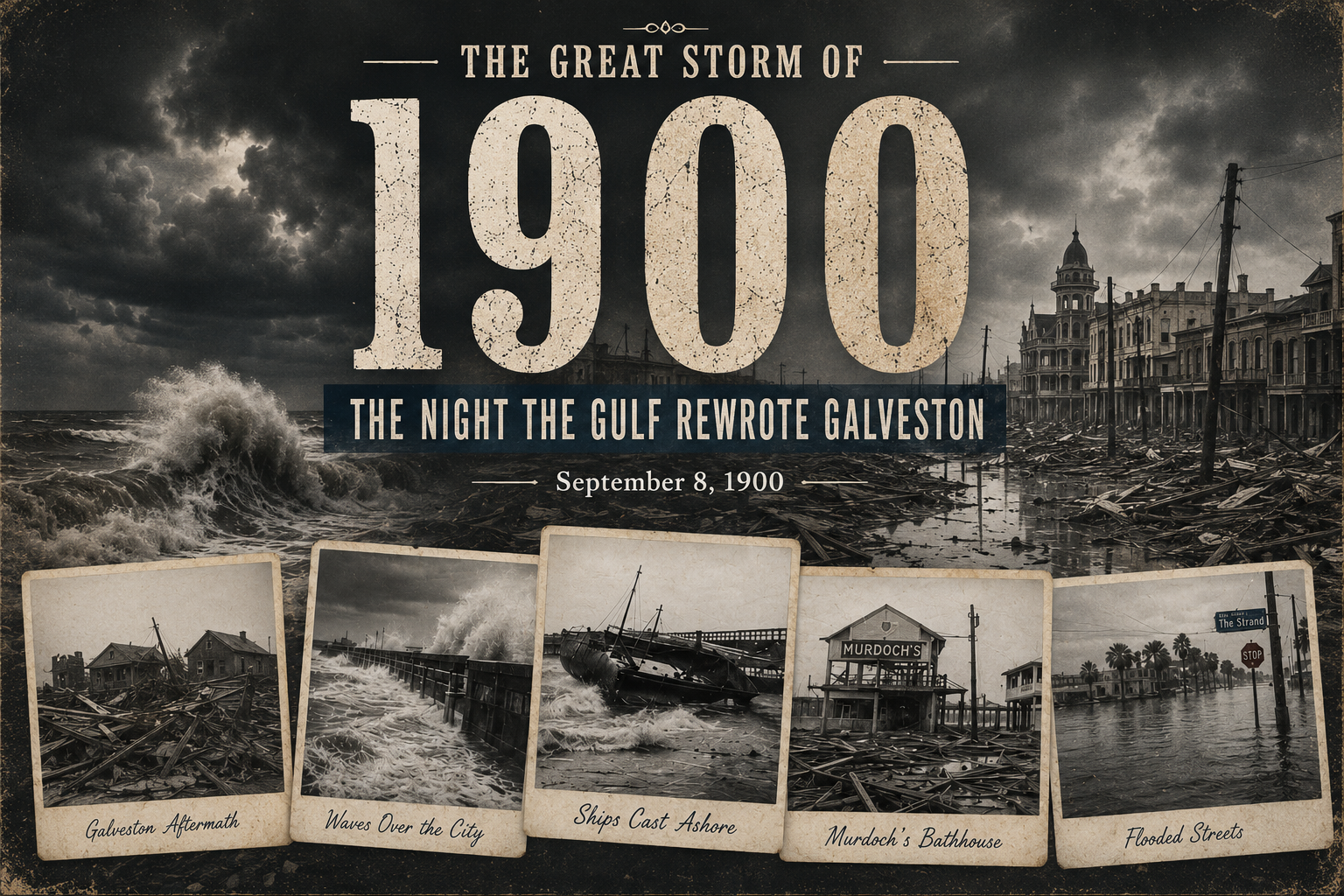
Galvestonians have never ignored hurricanes. The 1900 Storm remains part of the island’s identity, and the seawall itself exists because the city learned what the Gulf could do.
Ike made that history immediate again.
For people who lived through it, hurricane preparation became tied to specific memories. A forecast cone could mean loading family photographs into a car. A mandatory evacuation could mean remembering the weeks spent waiting to return. A high-water mark could mean knowing exactly which shelf the water reached inside a childhood home.
The storm also changed public planning. Evacuation, emergency communication, drainage, flood insurance, building elevation, backup power, and protected infrastructure became connected parts of the same problem. Galveston could not prevent hurricanes. It could reduce the number of systems that failed at once.
The Island After Ike
Galveston rebuilt because that is what Galveston does. That answer sounds simple until we remember what rebuilding required.
Residents gutted houses in the Texas humidity. Business owners opened with partial repairs because waiting meant losing everything. Workers returned to damaged schools, hospitals, hotels, docks, restaurants, and city facilities. Volunteers cleared debris. Families made decisions about which pieces of their former lives could be saved.
The island that emerged was more fortified in some places and more expensive in others. It had stronger infrastructure, elevated buildings, restored attractions, and new investment. It also had fewer longtime residents, unresolved housing fights, altered neighborhoods, and a sharper divide between a place people visit and a place people must be able to live.
That is how Hurricane Ike changed Galveston.
It did not erase the island. It exposed every fragile system beneath it, then forced Galveston to decide what would return, what would be protected, and who would still have a place here when the work was done.