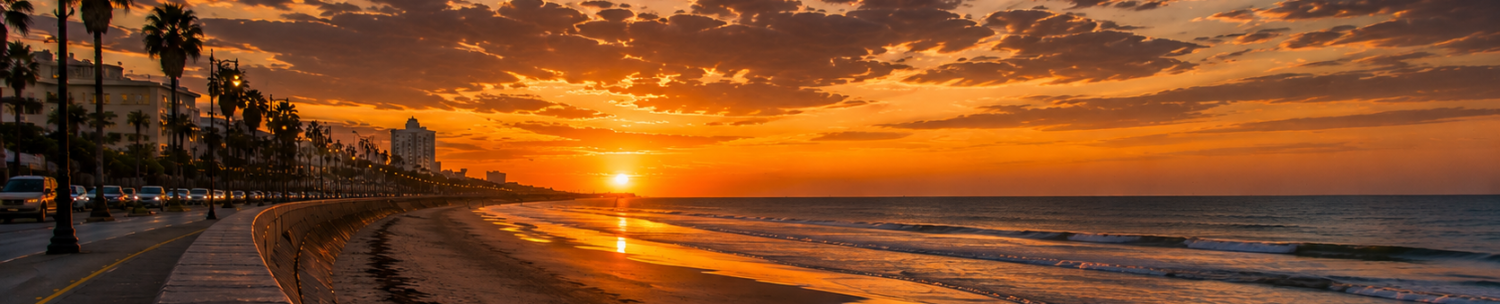
That Brown Seaweed on Galveston Beach: What Sargassum Is and Why It Matters
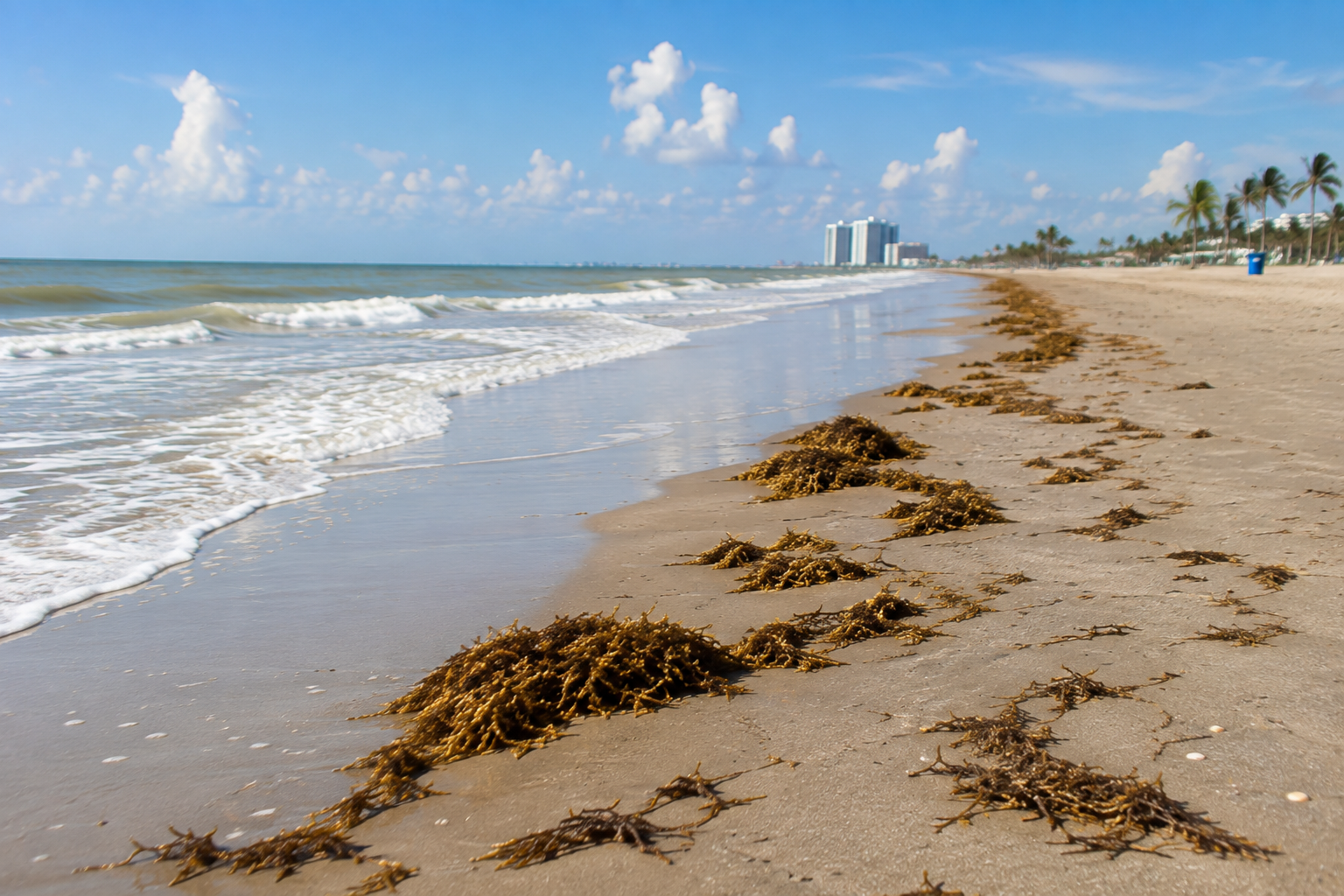
Spend enough time on a Galveston beach and eventually the Gulf delivers seaweed.
Sometimes it arrives as a thin brown line near the water. Sometimes small clumps roll in with every wave. Other times it piles up thick enough that getting from the dry sand to the water starts to feel like an obstacle course nobody signed up for.
That brown seaweed is usually sargassum, and it is a normal part of life on the Texas coast.
It can smell bad. It can stick to your legs. It can collect along the shoreline faster than beach crews could ever hope to remove it. It can also protect the beach, feed wildlife, shelter young marine animals, and help create the dunes that protect Galveston.
So before blaming somebody for not cleaning the beach, it helps to know what all that brown stuff is actually doing here.
What Is the Seaweed on Galveston Beach?
Sargassum is a type of brown algae that spends its life floating at the surface of the ocean instead of growing from the seafloor.
If you pick up a fresh piece, you can see small leafy branches and round structures that look a little like berries. They are not berries. They are gas-filled floats that help keep the algae near the surface.
That ability to float lets sargassum travel long distances with ocean currents.
It also lets individual clumps gather into larger patches and floating weed lines offshore.
Those floating patches are much more than loose vegetation drifting around the Gulf.
They are habitat.
Small fish hide inside them. Shrimp and crabs live around them. Young sea turtles use them for food and shelter. Offshore gamefish often patrol sargassum lines because so much smaller life gathers there.
The same seaweed people complain about stepping over on the beach can spend part of its life supporting an entire floating community offshore.
Why Does So Much Sargassum Wash Up in Galveston?
Sargassum moves with wind and current.
When Gulf conditions push floating mats toward the Upper Texas Coast, Galveston happens to be standing directly in the delivery zone.
There is no giant underwater seaweed field growing directly offshore and shedding pieces onto the beach. The sargassum may have traveled a considerable distance before reaching the island.
The amount that arrives can change drastically.
One week the shoreline may be nearly clear. A change in wind and current can bring considerably more onto the beach.
Late spring and summer are commonly associated with heavier sargassum arrivals along Galveston.
That is also why predicting exactly how much seaweed will be on one particular stretch of beach weeks in advance is difficult.
The Gulf does not check anybody’s vacation reservation before deciding what to send ashore.
Why Is Some Sargassum Golden Brown and Some Almost Black?
Fresh sargassum usually has a golden, tan, or brown appearance.
Once it washes onto the beach and begins breaking down, it gets darker.
Older piles can become deep brown or nearly black.
They also start producing that smell.
Anyone who has walked along the beach during a heavy sargassum period already knows the smell does not require an introduction.
Decomposing sargassum can release hydrogen sulfide, the same gas associated with the familiar rotten-egg odor.
Small, ordinary deposits are one thing. Very large accumulations can create stronger odors and may cause respiratory irritation, particularly for people who are sensitive to poor air quality.
If a heavy accumulation smells particularly strong and starts bothering your breathing, moving away from the pile is considerably smarter than proving a point to a heap of decomposing algae.
Why Doesn’t Galveston Just Remove All of It?
This is where things get more interesting.
Galveston does manage sargassum, but removing every strand that reaches shore would create another problem.
Beach seaweed catches sand.
As wind blows across the beach, sargassum and other natural material can slow that moving sand and help hold it in place.
Over time, trapped sand can contribute to the development of small dunes.
Those dunes matter on a barrier island.
Galveston spends an enormous amount of effort and money protecting and restoring its beaches. Removing natural material without considering the sand trapped inside it would be an impressive way to solve one cosmetic problem by helping create an erosion problem.
Galveston County therefore has rules governing when sargassum can be mechanically removed.
Current Galveston beach guidance says county regulations generally permit removal after accumulations reach at least eight feet wide and six inches high, measured perpendicular to the shoreline.
That is not because somebody forgot where the tractor keys are.
It is part of balancing beach recreation with coastal protection.
Sargassum Can Actually Help Build Dunes
This sounds backwards until you watch what happens around a pile of dried seaweed.
Wind pushes sand across the beach.
The sargassum catches some of it.
More sand gathers.
Vegetation can eventually establish itself around stable areas.
The result can contribute to dune development.
Texas coastal researchers have specifically studied sargassum around Galveston to understand how it affects erosion, dune plants, and beach wildlife.
That does not mean every giant pile should remain untouched forever.
It means seaweed management is more complicated than making the beach look perfectly raked for a photograph.
Galveston is not a resort swimming pool with decorative sand around it.
It is a working barrier island sitting directly against the Gulf.
What Lives in Sargassum?
Offshore sargassum can function almost like a floating nursery.
Tiny fish use the tangled algae for cover.
Crabs and shrimp move through it.
Juvenile sea turtles can hide and feed among floating mats.
Larger fish then appear because smaller fish have already gathered there.
Species associated with offshore sargassum habitat can include jacks, triggerfish, mahi mahi, and other Gulf species.
For fishermen, a well-developed offshore weed line can be worth investigating for exactly that reason.
Life attracts life.
The floating brown patch that looks like debris from a distance may be holding an impressive amount of it.
What Happens After Sargassum Reaches the Beach?
Once it lands, the role changes.
Small beach organisms use washed-up organic material for food and shelter.
Birds work along the wrack line looking for those organisms.
The material traps sand.
Then decomposition starts breaking the seaweed down and returning nutrients to the coastal environment.
Eventually much of it becomes part of the beach system.
That messy line along the shoreline has a name too.
It is often called the wrack line, and it can contain sargassum, shells, drift material, sea grass, and whatever else the Gulf deposited during recent tides and waves.
For shell hunters, the wrack line can also be worth checking because small shells and other interesting finds often collect with it.
Just remember that living things may be hiding inside the pile too.
Is Sargassum Dangerous?
Normal amounts of fresh sargassum are part of the coastal environment.
Problems become more likely when exceptionally large quantities collect and begin decomposing.
Heavy decomposition can produce hydrogen sulfide gas. Large inundations can also create environmental problems near shore, including reduced oxygen levels as the material breaks down.
The simplest rule for beachgoers is not particularly complicated.
If the sargassum smells overwhelmingly strong, irritates your eyes or breathing, or has formed a massive decomposing pile, give it some distance.
For normal beach conditions, check current Galveston beach advisories rather than trying to judge water safety by appearance alone.
Galveston County Beach Watch monitors recreational water at dozens of locations around Galveston Island and nearby coastal areas.
Brown water does not automatically mean unsafe water.
Seaweed does not automatically mean unsafe water either.
Actual monitoring data beats beach speculation every time.
Is Sargassum the Same Every Year?
Not even close.
Sargassum quantities vary from year to year because ocean circulation, winds, currents, nutrient availability, and large-scale Atlantic conditions all affect where the algae grows and where it travels.
Since 2011, scientists have also documented enormous amounts of sargassum across a region of the Atlantic now known as the Great Atlantic Sargassum Belt.
That larger system can send huge amounts westward into the Caribbean and Gulf.
Some years produce relatively manageable arrivals.
Other years make it appear that the Atlantic decided Texas needed mulch.
Even during a heavy year, conditions can vary dramatically from beach to beach and from one week to the next.
Can You Avoid Seaweed on Galveston Beaches?
Sometimes.
Because sargassum arrivals are affected by wind and current, one part of the island may have more accumulation than another.
Managed beaches may also handle heavy deposits differently depending on local rules, access, wildlife concerns, erosion conditions, and the amount that has accumulated.
Checking current beach conditions before choosing a spot can help.
So can accepting one basic truth about Galveston.
The island changes.
The water changes color.
The surf changes.
Sand moves.
Storms reshape things.
Seaweed arrives.
Then a few days later the beach can look completely different.
That constant movement is not something malfunctioning.
It is the coast functioning.
Should You Leave Sargassum Alone?
For the most part, there is no reason for an individual beachgoer to start hauling natural sargassum off the beach.
Walk around it.
Look through the wrack line for shells.
Watch the birds working around it.
Teach the kids what the little floating “berries” actually do.
If it smells horrible, relocate your beach chair.
If you are staying directly beside an unusually heavy accumulation and have health concerns, check local conditions and advisories.
What you probably should not do is assume that every piece of seaweed on a natural beach represents neglect.
Sometimes leaving part of it there is deliberate.
The Seaweed Belongs Here
It is easy to love Galveston when the Gulf is blue, the wind is light, the sand is clean, and the sunrise looks like somebody spent an unreasonable amount of money arranging it.
The island is still Galveston when the water turns brown and a line of sargassum stretches down the beach.
That seaweed fed something offshore.
Something hid inside it.
Something hunted around it.
Birds will search through it after it lands.
Sand may collect around it.
Part of it may eventually help build the very beach beneath your feet.
It is messy.
It occasionally smells terrible.
It will absolutely ruin the pristine empty-beach picture somebody planned to post before breakfast.
It is also part of a living Gulf Coast.
And Galveston would not be Galveston without the Gulf bringing a little chaos ashore every now and then.