Redfish Fishing on Galveston Island: Where to Find Reds, What to Use, and How to Catch Them
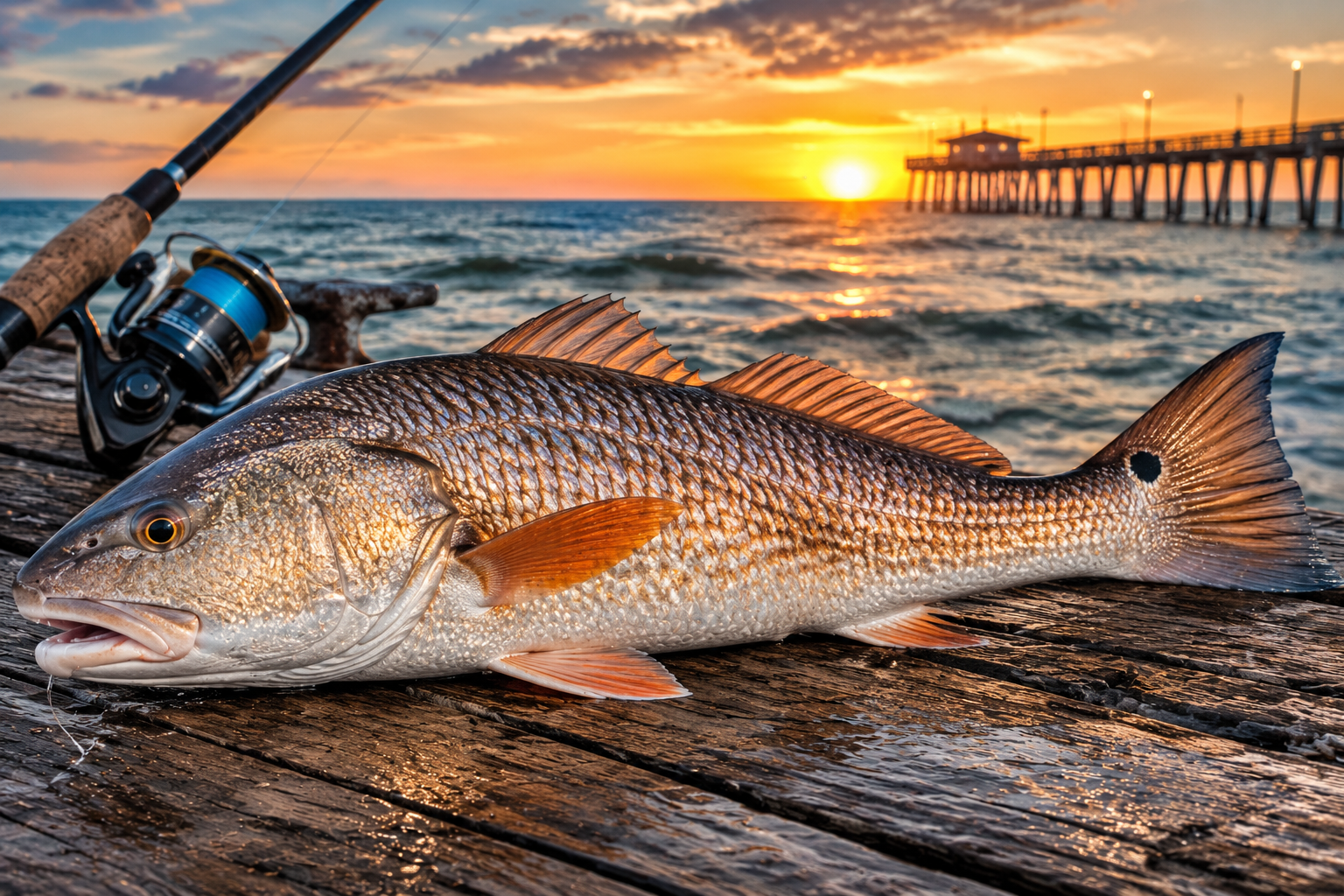
Redfish are one of those fish that make Galveston fishing interesting because they can show up almost anywhere.
You can catch smaller reds around bay structure, grass, marsh drains, rocks, piers, and channels. Larger bull reds move through passes, deeper water, the beachfront, and the surf.
That means you do not necessarily need a boat, specialized equipment, or a secret location guarded by somebody’s grandfather since 1974.
You need to understand how redfish move.
Redfish Around Galveston
Red drum, usually called redfish or reds, spend their younger years around bays, passes, and the surf zone. Texas Parks and Wildlife notes that young red drum often remain relatively close to the same area during their first several years.
Around Galveston, that gives shore and pier anglers a legitimate shot at them.
The trick is finding the places where food and moving water come together.
Redfish regularly feed on shrimp, mullet, crabs, small baitfish, and other available prey. They are not delicate little restaurant critics. If something looks edible, smells edible, and happens to cross the right stretch of water, a redfish may investigate.
Look for Moving Water
Current matters.
A drain emptying from a marsh, water moving around rocks, a cut between sandbars, or current flowing around pier pilings can concentrate both bait and predators.
Instead of staring at an enormous piece of water and wondering where the fish went, look for differences.
Look for bait gathering.
Look for mullet jumping.
Watch birds.
Watch where two different currents meet.
Pay attention to places where moving water slows behind structure.
Redfish often use those locations because food gets delivered to them.
Fish are efficient. Humans are the species willing to spend $800 on fishing equipment before standing in entirely the wrong place.
Best Bait for Galveston Redfish
Cut mullet deserves a place near the top.
A fresh chunk of mullet sends scent through the water and stays on the hook reasonably well. It is particularly useful in stained water, deeper water, the surf, and around larger fish.
Live shrimp is another excellent choice, especially around bayside structure and areas holding slot-sized reds.
Crab becomes increasingly interesting when targeting bigger fish.
Finger mullet and other appropriate live baitfish can also produce when reds are feeding heavily on fish.
If you already read our guide to the best saltwater bait around Galveston, the basic rule remains the same.
Match what you are using to what the fish are eating.
Fishing Cut Mullet
A simple bottom rig works extremely well.
Use enough weight to hold against the current without turning the entire operation into offshore oil exploration.
Keep the hook exposed.
Let the bait sit where a redfish is likely to travel.
In the surf, that does not always mean launching your bait toward Mexico.
Galveston’s surf contains deeper troughs, usually called guts, between sandbars. Fish travel through those deeper lanes searching for food.
The first gut can be surprisingly productive.
A redfish swimming twenty yards from the beach does not care that you own a rod capable of casting eighty yards.
Fishing Live Shrimp
Live shrimp can be worked under a popping cork when fish are feeding higher in the water column or around structure.
The sound from the cork attracts attention while the shrimp provides the actual meal.
Adjust the leader beneath the cork to keep the shrimp near the depth where fish are feeding.
Around deeper water, shrimp can also be free-lined or lightly weighted.
Redfish in the Surf
Fall receives plenty of attention because mature bull reds become more common along the beachfront and around Gulf passes.
But Galveston has redfish opportunities throughout much of the year.
During warmer periods, fish may move with bait through the surf.
After fronts and during cooler periods, deeper channels and protected areas can become more important.
Instead of deciding that one particular month is officially “redfish month,” watch water temperature, bait movement, tides, weather, and current.
The calendar does not swim.
Watch the Mullet
Few things get the attention of Galveston predators like concentrations of mullet.
If schools of mullet are moving down the beach, pay attention.
If something repeatedly explodes through those schools, pay considerably more attention.
Predators follow food.
Throwing fresh mullet near an active mullet school is not sophisticated fishing theory. It is offering dinner where everyone has already arrived for dinner.
Don’t Ignore Piers
Piers provide several things redfish like.
Structure.
Current.
Bait.
Different depths.
Lights at night.
A pier can cross several productive sections of water without the angler ever changing locations.
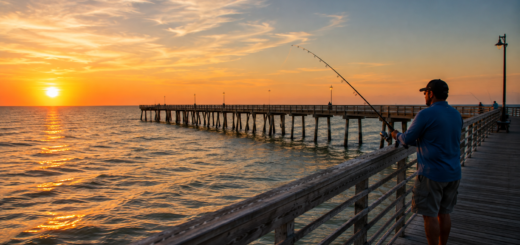
Fish near pilings, current breaks, deeper ends, and troughs crossed by the pier.
And watch what everyone else is catching.
Pier fishermen collectively operate one of the Gulf Coast’s largest unauthorized research departments.
Use Enough Tackle
Large redfish can punish equipment meant for smaller fish.
Your tackle does not have to resemble something borrowed from a commercial tuna boat, but your line, leader, hooks, drag, and landing equipment should match the size of fish you realistically expect.
A landing net becomes particularly important from elevated piers.
Getting a large redfish beside the pier and then realizing nobody brought the net provides a wonderful opportunity to learn several new combinations of profanity.
Know the Current Rules
Red drum are regulated game fish in Texas.
Size limits, bag limits, tags, licensing requirements, and other regulations should always be checked through the current Texas Parks and Wildlife Outdoor Annual before fishing.
This matters especially around the end of August because Texas fishing regulation years turn over September 1.
Regulations are considerably easier to check before the fishing trip than while explaining your interpretation of them to a game warden.
The Best Galveston Redfish Strategy
Keep it simple.
Find moving water.
Find bait.
Use shrimp, mullet, crab, or another natural prey item.
Put it where the fish travel.
Then give it time.
Redfish fishing gets complicated when anglers begin assuming the fish have read the same fishing forums they have.
The reds have their own plan.
Your job is to figure out what it is.